
How Funders and Nonprofits Can Build Better Relationships: An Open Dialogue

Nonprofit leaders know how disappointing it is to dream up a new collaborative initiative and spend resources trying to make it happen, only to have to shut it down due to lack of funding.
And funders, on the other hand, know that despite their resources, there are barriers to being involved with a funding project in the way they truly want to be from the start.
So how can funders and nonprofit leaders collaborate better, earlier, and smoother to increase their impact?
We sat down with two SWIM consultants who approach this conversation from opposite backgrounds: Amy Haynes, who has a background in nonprofit leadership, and Kerry McHugh, who has a background in philanthropy.
They had a frank conversation about the current state of nonprofit-funder partnerships and how they hope to see big leaps in meaningful collaboration from both sides.
Early Funder Presence and Openness Set the Tone for a Partnership
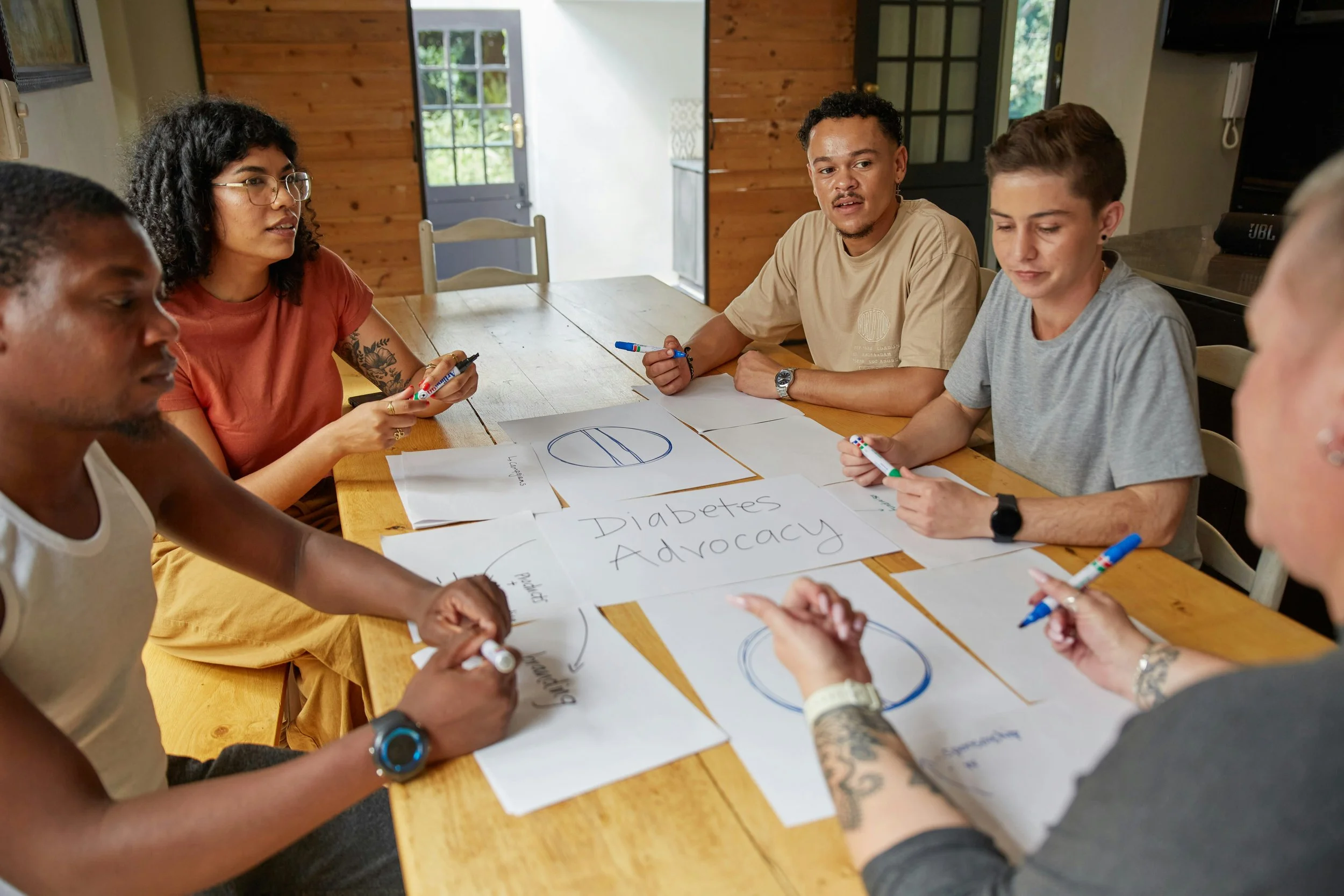
In Amy’s role as Executive Director of a health coalition, she was deeply impacted by how their main funder showed up at the table from the very start.
“He came to so many of those community forums, he was right there listening, building relationships. He was brought in as a thought partner from the very beginning and was treated just as anybody else,” Amy said.
When funders participate in coalitions as active and engaged partners in the work – not just funders of it – it’s a form of openness and respect that goes far with nonprofit leaders.
While Kerry expressed a distaste for the concept of a funder inviting themselves to be involved in a conversation or opportunity, she said that once trust is built, a funder could ask, “Would it be appropriate for me to join?” or “Where could I be most helpful if I have time to get more involved?”
Approaching a project with teachability stands in stark contrast with what Amy has experienced with some funders in her time as a nonprofit leader.
“I’ve seen funders who didn’t think twice about saying, ‘We've got the money and you're going to work on our terms,’” Amy said. “That's done a lot of damage.”
Invite Funders to Collaborate Beyond Finances

The opportunities for collaboration go far beyond money. Funders bring a network of people and resources that nonprofits don't typically have.
Funders can get involved in ways like:
Making the case for unrestricted funding from their organization and longer commitments to supporting the work unfolding
Advocating for different funding streams
Inviting other funders to the project
Helping nonprofits cut through red tape
Connecting nonprofits to politicians, business leaders, and government workers when relevant
Identifying additional partners who may be beneficial to the collective effort underway (community groups, nonprofits with adjacent missions, etc.)
Sharing firsthand perspectives as part of the community, seeing yourself as “part of” instead of “other than,” Kerry suggests. “If you're a parent in a community, you understand nuances about the school system that you don't need to necessarily conduct another focus group on.”
In Kerry’s eyes, funders getting invested in projects in this way is likely to contribute to longer-term success.
“I think if you see yourself as part of a process and not an ATM to the process, then you're more likely to take the actions necessary to ensure the work is sustainable and can be effective,” Kerry said.
She said that funders will enter conversations differently if they’re invested whether or not the effort is successful. The funding might be part of it, but that’s not all of it.
An ideal funder mindset, Kerry shared, is: “‘Even if my funding goes away, I still feel a sense of ownership and responsibility to steward this for the long term.’”
Amy gave an example of a funder using their network to support a food security project. This person sponsored feasibility research for a food hub and then brought other funders along to bring the food hub to life.
“It's a place for funders to step in and ask, ‘Can I use my relationships to help unlock resources for others?’” Amy said.
Funders Should Proactively Engage With Their Community
Sometimes funders posture themselves as a benefactor of their community rather than a member of it.
Kerry said that she often notices that funders who work within a specific community (also called place-based funders) typically want to understand what’s happening in grassroots organizations. While they often default to calling for a focus group to make that happen, she said that inviting the funder to be in community conversations as a participant, not as the funder, could rock the boat in a great way.
“If a funder can step into a process independent of whether or not the check is going to get cut, that can indicate that they are trustworthy,” Kerry said. “It’s an indication of openness, transparency, competence, partnership, and a learning mentality.”
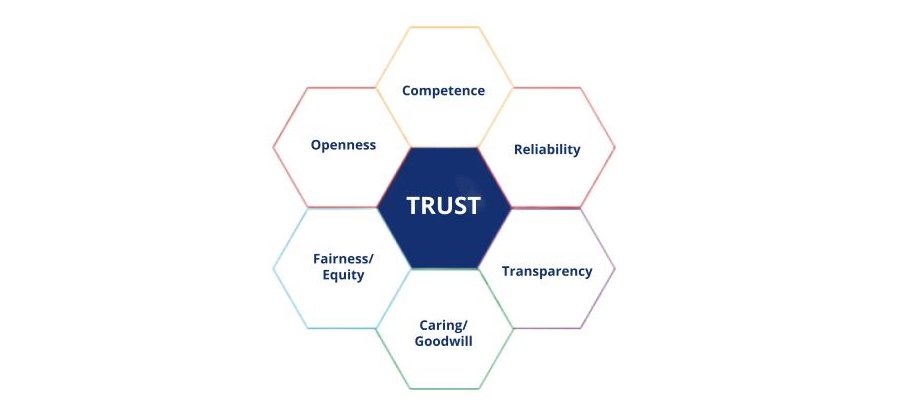
Openness, transparency, and goodwill are three of the six accelerators of trust, according to SWIM co-founder Stacy Van Gorp, who has a Ph.D. in organizational trust.
Rather than the entire process revolving around what one funder wants, from the reporting to the grant applications to the metrics, Kerry said she wants a shift where one funder is just that: one funder.
“There are dozens of funders, and all of those funders are actually dots in this massive spider web of networked organizations that are working across an ecosystem,” Kerry said.
Don’t Let Perfectionism Stop You From Trying
Kerry and Amy agreed that although this is a complex topic with much room for improvement, the funder engagement models can and should change.
“There's this idea of perfectionism, that if we can't get it right, we just won't do it,” Kerry said, both her and Amy noting that perfectionism is an element of white supremacy culture. “But we can really easily make the argument that what we're currently doing doesn't work for anybody. The coalitions aren't happy, nonprofits aren't happy, communities are not being served. Funders are unhappy. And so could we just try it differently?”
Amy shared examples throughout the conversation of funders she’s worked with who are getting this right, like the Kate B. Reynolds Charitable Trust and the Robert Wood Johnson Foundation. While her experiences with other funders have led to some deep-rooted frustrations, she finds fault in the system, not the people.
“It’s a system that needs to evolve. There's a lot of good people involved in a bad system,” she said.
To nonprofit leaders, Kerry recommends starting with inviting funders to the table. Make it clear it’s not to make an ask, but just to talk and learn.
“They might all say no,” Kerry said. “But we don't know until we try.”
Reaching Across the Table
At SWIM, our consultants are deeply experienced in both worlds: fundraising and community organization leadership.
We help mission-driven organizations ignite their vision through:
Planning and strategy
Research and evaluation
Implementing change
We’d love to talk about how we can partner with you to increase your impact, whether you’re looking to fund meaningful projects or carry them out (or both!). Sign up for a free 30-minute call here.