
Looking Back: What I’d Tell Myself as a New Grantmaker
In 2014, I left my job working in communications to take a leap of faith and join The Helen J. Serini Foundation as the organization’s second (and only full-time) staff person. I was jumping into a new organization in a new sector, armed with a lot of excitement, a desire to learn, and no existing grantmaking structure to build upon.
I thought the hardest part would be the due diligence: deciding who was most worthy of funding. Turns out I couldn’t have been more wrong. That wasn’t the hardest part. It wasn’t even the most important part.
I’ve spent 10+ years in and around philanthropy since then as program officer, board member, family foundation trustee, advisor, and consultant. Here are five things I wish I’d known when I built that very first grantmaking process.
Lesson 1: Your process is a message unto itself; make sure it's the one you intend to send.
Long before I first heard of Trust-Based Philanthropy and the practices it espouses, I heard from grantseekers and grant partners how burdensome and tedious grant applications could be…including ours.
Over the years, I guided our foundation through a series of small, deliberate choices to reduce that burden:
Moving to a letter of inquiry before a full proposal
Emphasizing assets and joy in the work to be done
Approving renewal grants based on reports
Adopting shared application fields
Rethinking reporting in favor of real conversation
None of it felt particularly radical at the time. But cumulatively, it sent a message to potential grant partners: We respect your time. That message proved to be a better starting point for a relationship than any diligence ever could.
Lesson 2: The most important work lives outside of the application.
Grants management is no small thing, and there are lots of details to keep up with — reports, process paperwork, applications, and more. Large institutions and anyone handling government grant dollars know this especially well.
But for smaller funders, place-based funders, and those with lean staff models, the moments that matter most in grantmaking rarely happen inside the formal grant process. They happen in informal site visits, in follow-up calls, and in how you react and support when an organization tells you something went sideways.
It can be easy to skip coffee chats and casual phone calls when work feels busy, but in many cases, those conversations are the work.
Building relationships that can hold hard conversations requires an honest reckoning with the power dynamics that shape every exchange between a funder and a grantseeker. When one individual holds access to the financial resources another needs in order to achieve their mission, there is an inherent power imbalance at play.
Naming this dynamic and making a point to honor the expertise, skills, and resources that all parties bring into a conversation goes a long way in setting the stage for deeper relationships.
Lesson 3: Informal conversations are the seeds that grow into big-picture projects.
Early in my tenure with the foundation, I spent time getting to know peer funders working in the same geographic region, even if they had different approaches or focus areas. Over time, these one-on-one conversations grew into something larger and slightly more formal, as a group of funders in my home county of Frederick, Maryland started to share common challenges and opportunities with one another.
From these early conversations, we realized a shared desire to better understand our collective impact across the region and how it aligned with identified community needs. We pooled our resources and analyzed a collective $14 million in funding awarded to local nonprofits. We combined our grantmaking data within a shared data taxonomy and compared it to existing needs assessments to understand alignment, gaps, and opportunities.
Relationships with peer funders, built on honesty and a willingness to compare notes, are one of the most underutilized assets in the field.
Lesson 4: There’s no checklist for equity, just as there’s no finishing this work.
I've watched foundations launch equity initiatives while their processes remained burdensome, their grantee portfolios remained unchanged, and their boardrooms remained stagnant.
Stepping into the practice of the Equitable Evaluation Framework taught me about the power of holding steady over time: The work most in service of equity is ongoing, sometimes quiet, always iterative.
Equity is not a statement on a website, a list of activities, a checklist, or a toolbox. For me, it’s a sustained commitment to examining how power flows through our work, whose knowledge counts as evidence, and whether the people most affected by funding have any meaningful say in how it flows.
Lesson 5: Change doesn’t happen in a one-year grant cycle, but that means the grant cycle is the problem, not the pace of change.
For many years, I tried to understand how I could use my role and my work to advance equity: What was the trick to build an equitable grant application? What did I need to know to ensure the foundation’s grant portfolio was as diverse as the communities we claimed to serve?
Again, I found guidance in the practice of the Equitable Evaluation Framework, which defines equity as both a means and an end. In other words: How we get there matters as much as where we are going. By focusing only on the destination, I was failing to account for or appreciate the process along the way.
This inquiry pushed us as a foundation to consider the necessity of ongoing and unrestricted, flexible funding. Like so many other funders, we had been saying we wanted to support systems change but then funding like we wanted a neat and tidy deliverable by December.
We made slow and deliberate shifts toward more general operating support grants, committed in 3-4 year cycles. This allowed us to focus our processes on deepening trust and relationships over time. At the same time, our funded partners could continue their focus on addressing the root causes surfaced in supporting their clients on an ongoing basis.
If your strategy is aimed at the roots of a problem, at the policies, practices, and beliefs that hold inequity in place, then one-year restricted grants are unlikely to get you there. Multi-year general operating support is not a luxury or a passing trend; I’ve come to believe it is the alignment between funding practice and a foundation’s theory of change.
The Common Thread
The common thread in all of these? Good grantmaking is a learning practice. Not a set of policies you get right once and then implement forever, but an ongoing inquiry into whether your work is actually serving the people and the change you say you care about, informed by conversation and relationships built on a foundation of trust.
That inquiry — naming the gap between values and practice, and then iterating toward something better — is the work that I’m excited to continue to build at SWIM. If you're asking these questions in your foundation, we'd love to think alongside you.
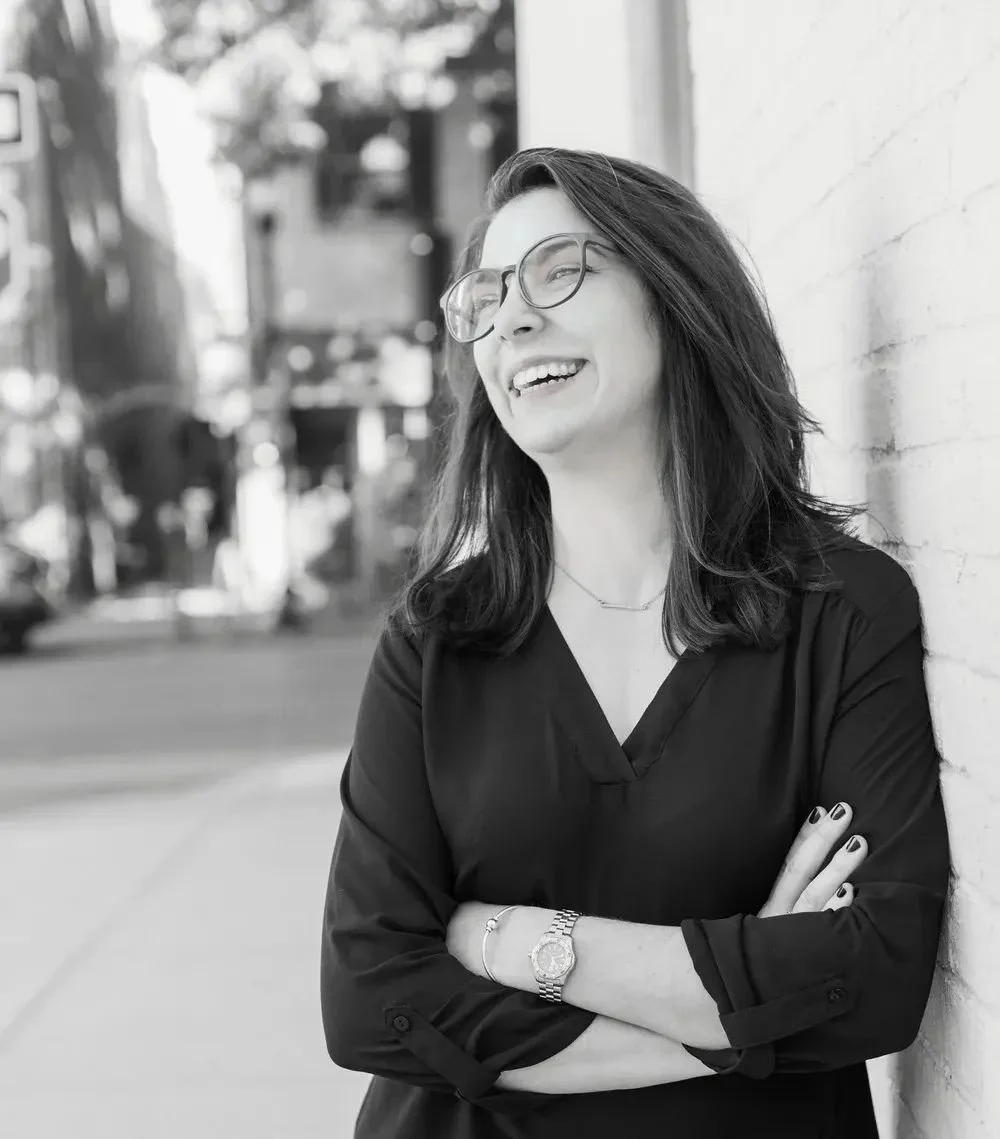
Kerry McHugh is a Facilitator and Consultant at See What I Mean (SWIM). She has spent more than a decade in philanthropy as a foundation program officer, board member, and trustee, and has served as a Knowledge Curator for the Equitable Evaluation Initiative since 2021.