
Data Isn’t Free. Here’s How to Respect the Cost.
By: Jenna Hoover, CNP

Imagine strolling up to the register at the grocery store and being stopped by the cashier. They ask for your address and ID and have you sign an affidavit stating your income before you can pile your stuff onto the conveyor belt. This is the reality for some people who access free groceries from food pantries: Their data is currency. And it's a reminder that no matter what industry you're in, you're not dealing with theoretical figures when you interpret data.
Data reflects people's choices, not abstract numbers.
At SWIM, this is the first of nine data principles we follow. As the resident data nerd on our team, I'm passionate about people thinking through gathering and using data ethically and equitably. Whether you want to send out a survey to your network, run a focus group, or dive into existing data to support a project, the frameworks in this article can be applied in your organization starting today.*
4 Ways to Acknowledge That Data Reflects People’s Choices
We are responsible for keeping data grounded in relationships rather than extraction.
Data is essentially just numbers that people in power decided were important, created by a set of choices: what to ask, who to ask, when to ask, how to ask. Numbers never tell the full story. People do. Context from community history and lived experiences has to sit alongside the data if you want a complete picture.
So how do you avoid extraction-based thinking and focus on relationships? Here are four things to keep in mind.
1. Recognize That Data Is Currency
Every dataset starts with someone's time, experience, and story. We approach that sharing as a contribution, not something to be extracted or exchanged.
People who access social services are often required to give up personal information to do it. That information data is not a free contribution. It's a cost of their privacy. Recognizing that gap, and working to close it, is where ethical data practice actually starts.
When we gather data, it needs to be in service of the person willing to give it. It’s something to cherish and steward, not mine for our own purposes. When we run a focus group or send out a survey, the data should be more useful for the person willing to give it than for us.
Think about your own relationship with data. Are you willing to share your income and ZIP code in exchange for access to something? Is that worth it to you?
Apply it: Ask yourself, "When we ask for information, who are we unintentionally pushing the cost onto? What are we giving back to the people we're asking?"
2. Spend Time With What's Already Known
We spend time with what is already known before asking more questions. We ask only what we plan to use.

A map from the SWIM Service Area Assessment for food banks, where we pinpoint where food insecurity is highest, where disparities exist, and where distribution can go further.
To be blunt: Stop asking people what you already know.
Use publicly available data, existing reports, and internet research to understand what's already well-documented. Then use people's time for their expertise and their ideas. Data gathering done right isn't just information collection. It's an opportunity to shift decision-making power toward the people most impacted.
I encourage you to spend time understanding the history of a place before jumping into the numbers. There are choices embedded in existing data: what got asked, who was counted, and who was left out. This is why you need to research history before asking more questions.
Here's a slice of the pre-research framework I complete before any Service Area Assessment:
History and ownership: Who lived here first? What land was taken, and how? What's still being erased?
Policy and power: Where were the highways built? Which neighborhoods were redlined? Where were grocery stores promised but never built?
Movement and memory: Who came here for work, for safety, or after being pushed out? How did housing policies, immigration enforcement, or incarceration shape the community?
Language and story: How is this place talked about in media and meetings? What gets framed as "need" and what gets framed as "resilience"? Whose voice is left out?
Ecology and climate: What communities have been pushed into flood zones or heat islands? Who is most vulnerable to climate change and already adapting without support?
When we come in armed with this context, we can invite participants to be decision-makers alongside our organizations rather than just reporting problems.
This:
“We know transportation is limited here and hours open don't align with most work schedules. We've seen XYZ work in other communities. What might those solutions get wrong about your community? Where do you see the biggest opportunity to improve access?”
Not that:
"What barriers do people in your community face when accessing food?"
Apply it: Ask yourself, "What publicly available data exists about this community's challenges and assets? Who story does publicly available data leave out?"
3. Respect the Cost and Compensate Accordingly
We design processes that respect the cost of sharing information and compensate people when appropriate.
Compensation acknowledges that giving you data is a real choice with real costs, not a neutral transaction.
There are three main ways to think about forms of compensation:
Limit your questions to what truly serves participants. Each question should benefit the people you're asking, not just funders or your organization.
Monetary compensation makes the process reciprocal rather than extractive. You could offer $50 per participant for an hour of their time and make a donation to the organization hosting the site.
We send our findings to the participants and ask for feedback. For example, a backbone organization surveys community residents about neighborhood needs. Residents get the findings presented back at a community meeting and are asked to help prioritize what comes next.
Apply it: Ask yourself, "Does each question in this survey serve the participants? Are any questions self-serving?"
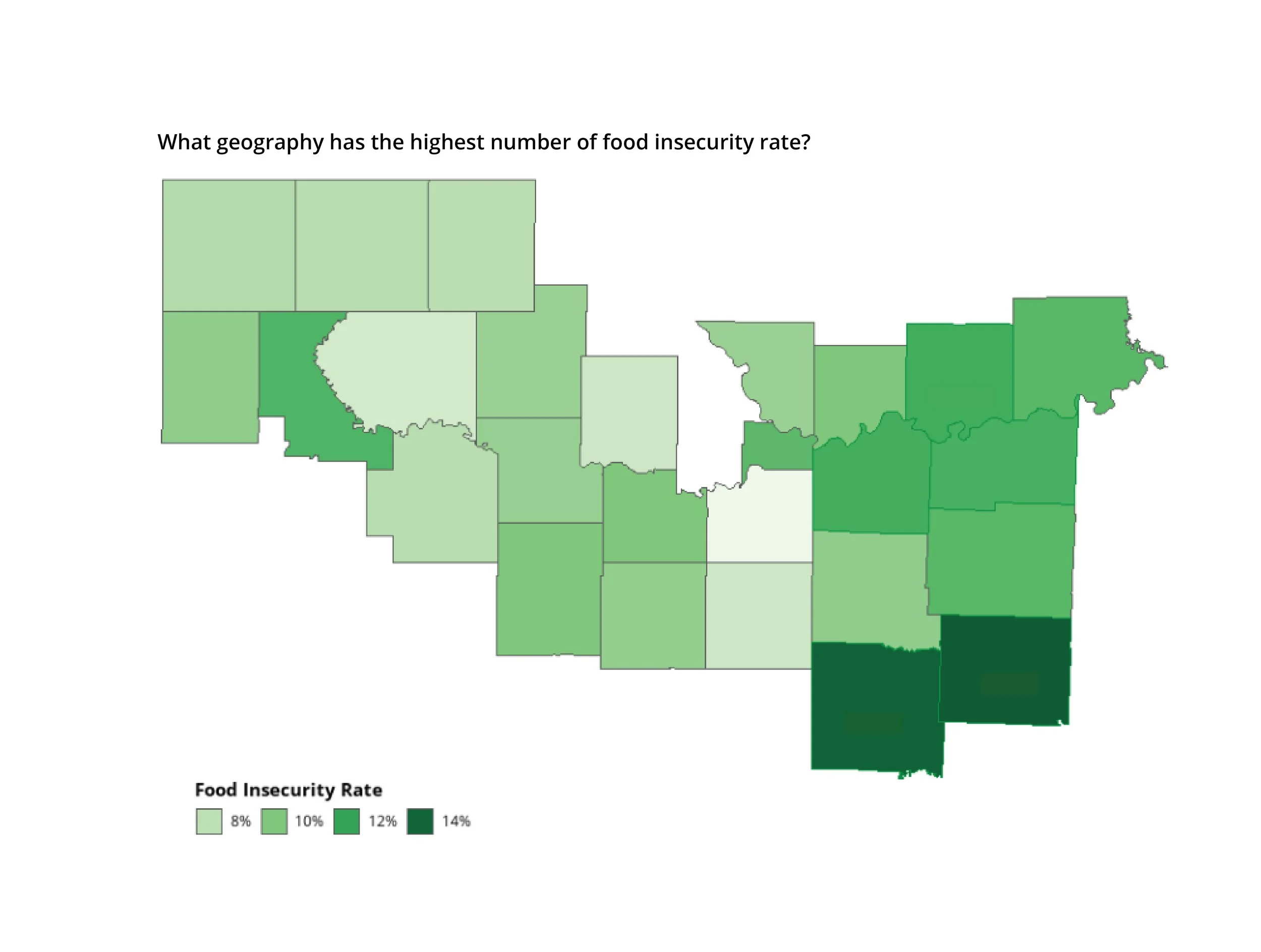
While publicly available data may point in one direction, community members can tell you if you’re missing important context.
4. Stay Open When Data Challenges Expectations
We question our own assumptions throughout, and we expect clients to do the same.
Sometimes data is just wrong. As data interpreters, we must be willing to be corrected and have our assumptions challenged. We may start with publicly available data, but what we find could be inaccurate or incomplete. Community members telling us we're missing something is incredibly helpful.
We saw this firsthand working with a food bank in Santa Barbara. We highlighted areas with significant disparities in food security, but the data missed something major: Seasonal farmworkers weren't showing up in census data. The very people who help harvest the area's produce often struggled to put food on their own tables. Food insecurity looked low in areas where it was actually high.
Apply it: Share your findings back with community members before you finalize anything. Ask them what the data is getting wrong.
Build Trust Through How You Gather Data
As a data gatherer, make sure communities aren't left out of decisions about their own lives. Before gathering data from others, ask yourself:
Will we actually use this information, and soon? For every question/field, can we name the specific decision or conversation it may inform in the next 12 months? If we can't, we shouldn't use it.
Can we find this from what already exists? Before using this as a field, do we know where the answer lives (a public document, a grantee list, etc.)? If most fields require interviews or guesswork, we shouldn't use it.
Would we share this with the organizations or people being described? If we'd be uncomfortable showing someone their own row, that's a signal the field may be extractive or has assumptions.
Could this cause harm or be misused? Could this question feel burdensome, expose sensitive information, or be used in ways that put people at risk (even unintentionally)? If there's any doubt, leave it out.
Your job is to honor the choice made to share with you and use information in ways that build trust, spark insight, and support meaningful change.

Jenna Hoover is passionate about using systems and design to connect people to information. In her role as a network development consultant with See What I Mean (SWIM), she helps network leaders, changemakers, and communities explore data in compelling ways to drive change.
Through authenticity, co-creation, and empathy, Jenna helps design stories and engagements that transform data into action. You can often find her in collaborative spaces surrounded by a cluster of sticky notes, supporting organizations to find clarity (while turning those big ideas into tangible actions 😉).
Jenna has worked with a variety of networks in youth development, financial literacy, housing, hunger, and health. She is a Certified Nonprofit Professional (CNP) and has an M.P.S. in Data Analytics and Visualization from MICA.
*These frameworks are deeply inspired by the data equity work of Heather Krause (founder of We All Count) and the work of Kat Greenbrook on the meaning behind numbers. I’ve adapted their ideas to match our work at SWIM.