
Quiz: What’s Your Social Change Style?
By: The SWIM team

As folks who work with food banks regularly, we often see comments on social media that disparage fundraising efforts by the largest domestic hunger-relief organization, Feeding America. “Don’t give to them!”, the commenters will say. “These people don't give any money to local communities!!”
While it’s (very) true that local food pantries need support, Feeding America is also one of the biggest drivers of policy change around ending hunger. They work directly with Congress to expand core safety net programs like SNAP, they integrate the charitable food network with public health initiatives, they run legislative campaigns, and more.
So which take is right? Should you fund your neighbor’s next meal, or effect national change so all Americans have access to the food they need?
Both are right, and they represent two of the six styles of social change. What we’re seeing in these comment sections is people who are passionate about a Direct Services Change Approach and perhaps less interested in a Policy Change Approach for this particular issue.
In the issue of food insecurity, we need both. In fact, it’s also important to research root causes and trends, build up a movement of people who care, and strengthen leaders and organizations who are working every day on the cause. Take any social change movement and you’ll find organizations and individuals who take different approaches to a solution. That’s the wonderful reality of activating change.
So what’s your social change style? How do you want to address the problems you care most about? Knowing the answer can help you determine how you’re uniquely poised to make change and what type of organizations you might want to donate to on a day like Giving Tuesday, or on any regular day.
We’ll help you find out your social change style in this article so you can focus your giving, your volunteering, and your efforts to create positive change in your community.
About SWIM: At See What I Mean (SWIM), we’re strategic planning geeks. Our nonprofit consultants help leaders across food banks, philanthropy, and purpose-driven organizations clarify direction, build capacity, and make decisions that move their work forward.
Take the Quiz
Let’s start with a short quiz* to illuminate your preferences for change. For each of the four problems below, pick one example of an action that you think would be most valuable and effective.
Civic participation
A. Launch a program that matches seniors and teens to improve their community.
B. Put a dollar value on volunteerism so everyone can understand its importance.
C. Support a non-partisan get-out-the-vote campaign.
D. Change campaign finance laws.
E. Help civic organizations create better websites to attract more members.
Community economic development
A. Support programs that inspire entrepreneurship in young adults.
B. Engage in research that identifies how money flows in and out of the community.
C. Promote "buy local" messages.
D. Lobby local leaders to adopt zoning rules that support economic development.
E. Help economic development groups start a sustainable internship program.
K-12 education
A. Provide more pre-K school readiness programs.
B. Study which programs improve reading and share information.
C. Engage parents in speaking out for the interests of their children.
D. Adjust federal education policy.
E. Upgrade school data systems to improve early identification of students who may drop out.
Housing
A. Volunteer with a home-building nonprofit.
B. Identify the factors affecting people who are unhoused in your community.
C. Engage in a social media campaign about the shortage of affordable housing.
D. Support the continuation of tax deductibility for mortgage interest.
E. Provide technical support to advance energy efficiency.
Score your responses. Count responses for each letter:
___ A's: Direct Services
___ B's: Research and Visioning
___ C's: Movement Building
___ D's: Policy Change and Watchdog
___ E's: Capacity Building
6 Styles of Social Change
“When people give their money (and time) away they usually have a vision — rough or refined — for what they want their money to buy...they want to help, fix, and change the world. But most don’t have a vocabulary for this,” said Stephanie Clohesy, consultant and SWIM collaborator (and originator of this quiz!).
Finding that vocabulary “transforms a giver into a strategist,” Stephanie says. “Suddenly their money has meaning and power to make real change, and the giver discovers or affirms the value of their own ideas.”
Let’s get into the six primary change approaches** that can inform how and where you might want to contribute via donations, volunteering, or advocacy.
1. Direct Services Change Approach

If you got mostly A’s, you want to solve problems by supporting one individual at a time through programming designed to meet their urgent needs. You want to see boots on the ground, getting tangible results, right now.
Direct services could come in the form of crisis relief or personal well-being and empowerment. It might impact animals or be paired with broader advocacy initiatives. Either way, you’re results-oriented and you want to see immediate relief paired with long-term transformation.
In your charitable giving, look for:
Aid opportunities after natural disasters or amid humanitarian crises
Organizations that have robust data tracking and demographic information
Stories from people who have been impacted by the services being delivered
Partnerships with organizations working on the policy angle of the issue being addressed
Examples: American Red Cross, Junior Achievement, Save the Manatee Club, community foundations, women’s foundations
2. Research and Visionary Change Approach

Selected mostly B’s? You’re passionate about thoroughly understanding an issue and its root causes in order to create systemic, transformative change. When faced with an issue, you find yourself diving deep on research, collecting all possible information, and using data to reframe and innovate around the problem.
You are probably drawn to support new research and fund innovative programs. You like organizations that seem to be on the cutting edge of issues.
In your charitable giving, look for:
A think tank, a research lab, a consulting firm, or an organization that centers around an issue
A track record of success in making new discoveries and acting on them
An objective, non-partisan organization that focuses on facts and data to inform their work
Examples: Aspen Institute, Urban Institute, The Wallace Foundation, McKinsey & Company, Pew Charitable Trust
3. Movement Building Change Approach
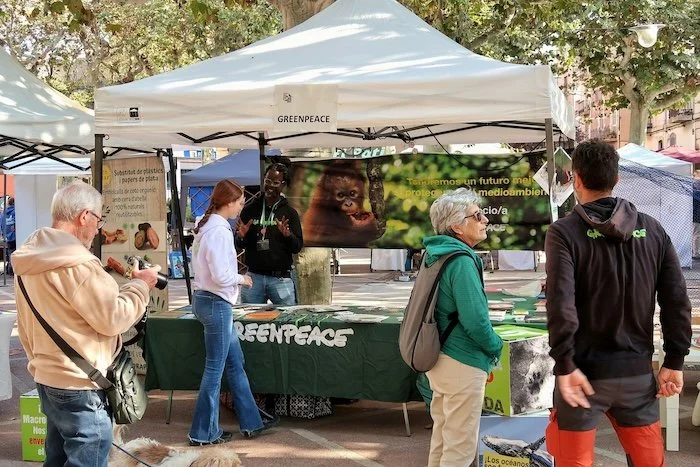
If you got mostly C’s, you like to support movements and see them grow. You’re an advocate and a risk-taker, and lend your voice as often as your money and time. You are drawn to grassroots organizing, social action, media campaigns, and educating the public on issues you care about.
You might find yourself posting on social media to inform your followers about a cause you want to inspire others to join. You’re consistent and patient — you want to see deep and lasting change happen through building momentum and inspiring collective action.
In your charitable giving, look for:
How many people an organization involves and whether they’ve been growing
Collaboration with other communities that work on the same issue from different perspectives
Opportunities to fund movements that use research to make a case, rather than funding research
Organizations that tie local efforts with national initiatives
Examples: Black Lives Matter, Earth Day, #MeToo
4. Policy Change Approach

If you selected mostly D’s, you care about public policy and advocacy work: broad-scale, systemic change via passing, amending, or repealing laws to align with targeted priorities. You might care deeply about grassroots political action campaigns or direct lobbying through 501(c)4 nonprofits.
If you see a problem, you want the government to do something about it, and you’re in it for the long haul. You get excited when your ballot shows up and you rally around candidates who care about the same things you do. You’ve probably donated money at least once to a political group or candidate, or volunteered at the polls.
You don’t just want a temporary solution — you want to catalyze the government into action and see permanent change for the well-being of an entire class of people.
In your charitable giving, look for:
Results of campaigns the organization has run
Collaboration with a variety of groups who can address an issue from different angles
Relationships with those who influence public policy
Examples: ACLU, Everytown for Gun Safety, Greenpeace
5. Watchdog Change Approach

Those who selected mostly D’s might also fall into the Watchdog Change Approach. Watchdog strategies focus on monitoring public policies and practices to defend and protect human, social and civil rights. If there is systemic, enduring opposition or controversy, you’re most likely at the protest.
You’re probably especially good at keeping your eyes on legislation, court rulings, and public policy, with an awareness that holistic efforts are needed to make a change stick. You might be known for your strong points of view and willingness to go to bat for what you care about.
In your charitable giving, look for:
Watchdog organizations that monitor policies of an issue you care about
A holistic, diverse strategy to address one specific issue
Strong associations between a local organization and national strategy
Examples: AARP, GLAAD, Sierra Club, NAACP
6. Capacity Building Change Approach

If you got mostly E’s, you’re all about increasing the effectiveness of organizations that are already doing the work. You want to bolster and expand the sustainability of an organization rather than helping something start from scratch. You believe deeply in developing leaders who can accelerate and sustain positive change.
You might get excited about donating to scale a service, hire more staff to expand a program, create a nonprofit strategic plan, or support technology improvements like a new website or database.
Although these changes may not be the most exciting or attractive to most, you want an organization to be well-run, and you like helping them get there.
In your charitable giving, look for:
Opportunities to donate to specific, measurable goals with tangible outcomes
Strong and viable organizations who are facing a specific obstacle
Small, young organizations that need help with assessment and analysis in order to expand into new geographies or services
Leadership development and administrative needs
Examples: Grantmakers for Effective Organizations, TechSoup, First Children's Finance
Lean Into Your Unique Change Style
There will always be tension in an engaged society around which approach is most effective. But we know through working with purpose-driven organizations that we need every approach for change to last.
Now that you know which change style gets you excited, lean into it and use it as a filter for how you give away your time, talents, and resources.
—
*This quiz has been adapted from materials provided as a courtesy from Clohesy Consulting, Copyright 2008.
**We've built these descriptions based on an earlier version from SWIM Collaborator, Stephanie Clohesy. She named these approaches in partnership with the Women's Funding Network to help leaders across the network recognize patterns and unify an understanding of outcomes.