
6 Reflection Questions for the End of the Fiscal Year, From the SWIM Team

We think we might know what your summer is looking like as a nonprofit leader. You’re living the end-of-the-fiscal-year sprint stress every day: spending every last cent of your grant dollars, emailing and calling lapsed donors, pulling together annual reports to present to the board and your funders, and trying not to burn out before next year’s budget is approved.
Even though summer weather is beckoning you to slow down and step outside, your mission calls.
Before moving on to next year’s goals, vision, and numbers, we want to help you finish this last year well. We can’t audit your budget or write your reports for you, but as nonprofit consultants, we love helping organizations activate change as they drive their mission forward.
Ask these 6 questions in your final team meeting of the fiscal year to make sure you look back and learn before you take your next steps forward.
1. What Are You Most Proud Of?
SWIM project manager Kelsey Kleinheinz, CNP, recommends you ground your reflection in celebration before you start analyzing anything. Go around the room and have everyone share something they’re proud of from the past year. You might be surprised as you’re reminded about what you all pulled off as a team.
Your team deserves to say these accomplishments out loud, and now’s the time.
2. What Did a Colleague Do This Year That You Want to Name Out Loud?
This will open up a whole host of new accomplishments after the previous question. Nonprofit leaders can be hesitant to celebrate themselves, but we’re great at celebrating others. Our network development consultant Jenna Hoover, CNP, suggests having everyone share something about the person to their left so that each team member gets celebrated.
This is great for morale, but also signals what you may want to keep focusing on for the year to come.
3. What Seeds Should We Plant?
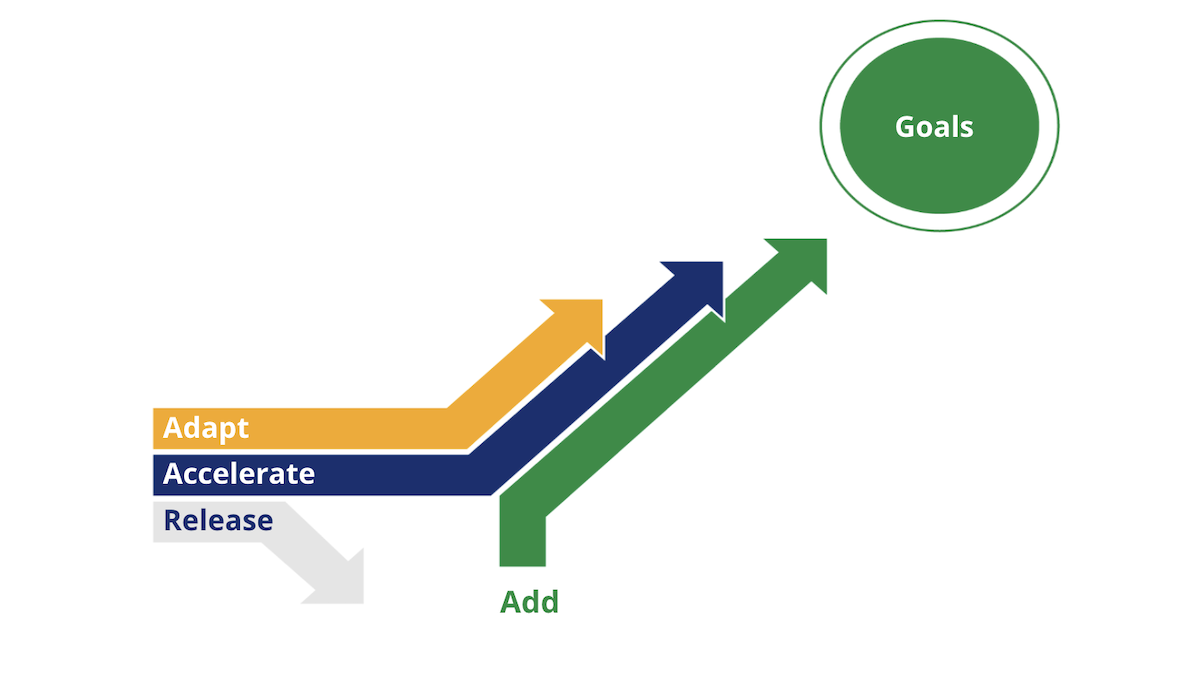
This framework calls on teams to build upon what is already working (adapt, accelerate), stop what doesn’t fit your strategic direction (release), and selectively add new work.
At SWIM, we're a team with Midwestern roots, so we naturally reach for planting imagery when we do reflection work. Our co-founder Stacy Van Gorp, Ph.D., recommends thinking through a harvesting lens.
What needs to be watered and tended to keep growing? What's ready to harvest? What should be plowed under so something better can grow in its place?
This maps onto the framework we use in strategic planning: Adapt, Accelerate, Release, Add. Some things need to change shape. Some things need more fuel. And some things need to be let go so they can feed what comes next.
Some potential things to “plow under,” or what we might call “adapt” or “release,” could be:
A program that no longer fits with your strategic goals
A new piece of software that the team never fully adopted
An initiative that is taking up too much time and energy in relation to its effectiveness
With resources freed up, you can double down on what’s working or make room to plant something brand new.
4. Where Can We Be Intentional About Finding Moments of Pause in Our Work?
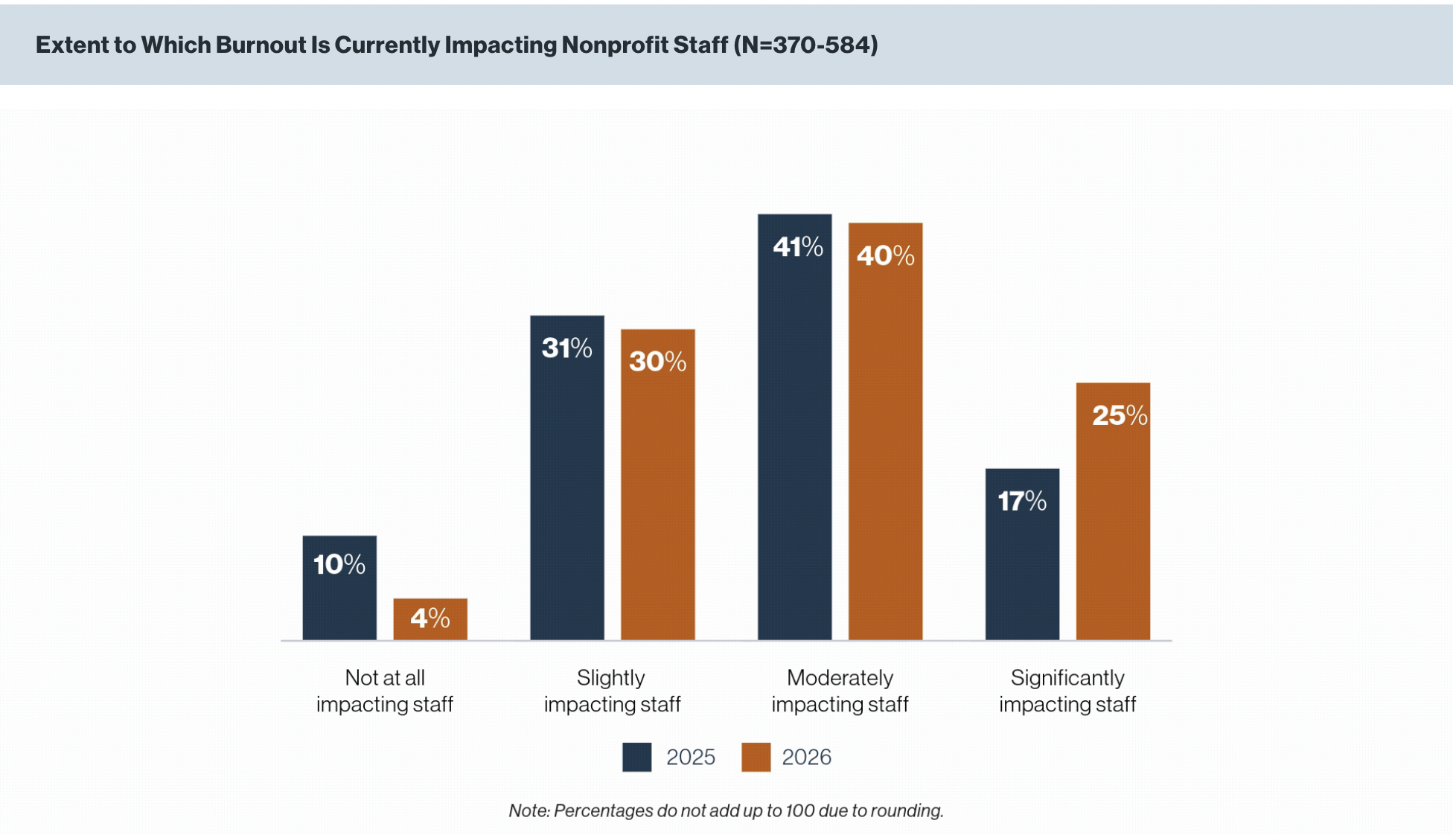
65% of CEOs believe that burnout is moderately or significantly impacting their staff. (Source: Center for Effective Philanthropy’s State of Nonprofits 2026 report)
Nonprofit burnout is higher than ever. Almost half (46%) of nonprofit CEOs report that their own burnout is “very much a concern,” a big jump from 29% in 2025, according to CEP. And 65% of CEOs say burnout is moderately or significantly impacting their staff.
In many sectors, there’s an increased demand for services but more volatile funding and fewer donations. The burnout makes sense!
SWIM consultant Kerry McHugh recommends that you reflect on how your team can pause this next year.
Think about some consistent ways you can:
Let learnings settle
Leave room for shifts to begin
Provide time for recharge and rejuvenation
Reflect on what this year asked of your team and allow for honest sharing on how everyone held up. Then explore what small shifts might be possible to sustain your people as well as your work.
5. Who Did We Serve Well, and Who Did We Miss?
You probably know who showed up. Do you know who didn't? Who should have benefited from your work this year but didn't make it through the door? Jenna’s advice is to name the gap (using data) to provide a guide for next year’s work.
Our team uses the Meeting, Missing, Matching framework for helping our clients turn intentions into actionable strategies.
6. Use the ORID Conversation Framework
Okay, this one is a bit of a cheat, because rather than a question, it’s a whole meeting in one bullet list. SWIM consultant Amy Haynes, MSW says that she’s used this framework from “The Art of Focused Conversation” with groups to facilitate reflection.
ORID stands for Objective, Reflective, Interpretive, and Decisional.
The sequence of the questions is intentional, starting with the facts and moving through reflections and interpretations, ending with "So what?" decisional-level questions.
Here is the whole list, all quoted from the book:
Opening:
Review any objective data you have on the year, such as information on finances, statistics on sales or services, data on customers or staffing.
Objective Questions:
What have been some of the key events for you in the past year?
What major projects have we worked on? Minor projects?
What other events do you remember—important conversations or discussions or decisions made?
Reflective Questions:
Describe the dynamics of this year—what was it like for us? Was it more like an earthquake, a bear, a squirrel, or a cactus?
What was the biggest surprise of the year?
When were you most frustrated?
Which events made a big difference to you—changed how you thought or felt?
Which of the events mentioned had you forgotten about?
Interpretive Questions:
What did we learn from the things that went well?
What did we learn from the times where we struggled?
As you reflect on all of this, how would you talk about what we have accomplished this year?
Decisional Questions:
How will our experience of this year and our learnings affect what we do in the coming year?
What are we saying we want to do differently?
You can just choose 1 or 2 questions for each level, and you might customize the questions differently if you’re reflecting with your board, with your team, or solo.
Look Back, Then Move Forward
With these reflection questions, you’ll give your team the gift of a moment of downtime in your busiest season. We mean it — it’s a deep relief to be given a moment to pause, celebrate, and learn from what happened in the last fiscal year.
We hope these questions give you the reflection opportunity your team needs as you head into your best year yet.