
5 Ways to Use Your Strategic Plan Every Day
Early in my consulting career, I would help an organization build a strategic plan, hand it off with a lot of hope and good intentions, and walk away.
A few years later, one of those clients called me back. They wanted help reviewing their plan. As I sat with them, it became clear that they had made many significant decisions in the last two years without leaning on the plan to guide them. Smart, talented, hardworking people had not fully internalized it. The choices they made may have been good ones, but the plan had rarely been part of the conversation.
I felt like I had done them a disservice. Not in the planning work, but in never helping them create moments to actually use it.
5 High-Leverage Moments to Implement Your Strategic Plan
If you have just finished a strategic plan, or you are sitting on one right now, skip the idea of a six-month check-in and consider these five moments where your strategic plan can become what your organization actually does and is.

Meeting agendas are where your strategic plan can either thrive or disappear.
1. Metrics Mapping
Metrics are most powerful when they are connected to strategy. The problem many organizations run into is that their metrics run alongside their strategic plan rather than being knitted to it. You end up measuring things that are not connected to any strategic goal, and you miss things that are.
Put This Into Action
Map each of your metrics directly to a strategic goal. If a metric does not connect to a strategy, ask yourself why you are measuring it. And if a strategy has no metric attached to it, ask what you might be missing.
2. Meeting Agendas
This is where the plan thrives or disappears: board meetings, all-staff gatherings, leadership team check-ins. These meetings happen whether you are ready for them or not. They are where culture is built or eroded. And when facilitated well, they have real power to shift daily work and change thinking.
The most effective approach is to let your strategic plan become the architecture of your meeting agenda, not just an item on it.
If your plan has three strategic priorities, your agenda has three corresponding segments. When someone asks to add an item, the question becomes: Where does this fit in our plan? If you cannot find a home for it, it may not belong in the prime real estate of your meeting time. Budget presentations, committee reports, staff updates; all of them can be framed around how they connect to the plan.
Rather than thinking about this as adding work, think of it this way: You’re using the time you already spend in meetings to keep the plan alive in the room.
Put This Into Action
Before your next board or all-staff meeting, look at your agenda and ask: Does every item connect to a strategic priority? Redesign the agenda so that the structure of your plan is the structure of the meeting.
3. Responses to Changes and Challenges
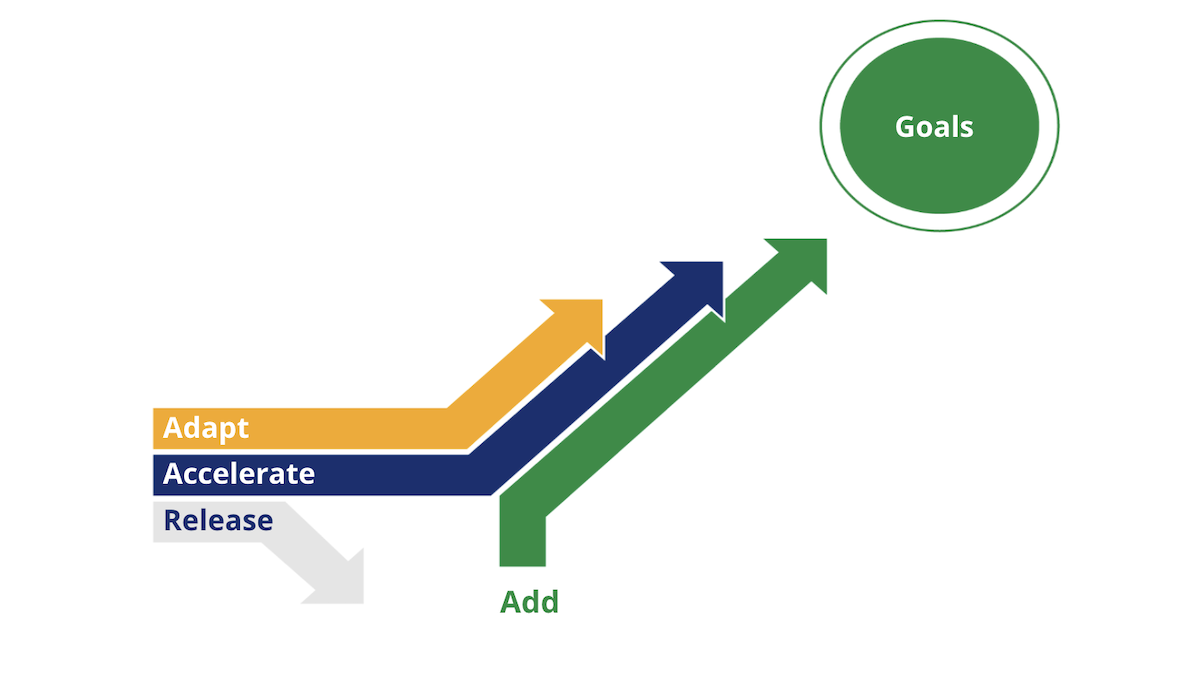
Your strategic plan can help you stay focused on what you want to accelerate and what you want to release when problems come up.
Something unexpected lands on your desk: a funding shift, a policy change, a community crisis, a competitor move. The temptation is to react fast and figure it out separately from everything else. But external challenges are actually one of the best moments to return to your plan.
Your strategic plan reflects your values, your priorities, and the direction your organization has committed to. It can serve as a filter for how you respond.
Put This Into Action
When a significant external challenge arrives, before you convene to problem-solve, pull out the plan. Ask: How does our response to this align with our strategic priorities? Does it accelerate or distract from where we said we were going?
4. Management Systems and Operations
A strategic plan is most alive when your management systems are all pulling in the same direction — linked tracks, not parallel ones. Budgeting, annual planning, prioritization, day-to-day decision making…when those systems run on different tracks, the plan stays stuck on the wall while the real work moved on ahead on its own tracks.
The goal is integration. For example, when a manager is considering a new initiative, they should ask:
How does this contribute to our strategies?
How does this move our metrics?
Those questions, asked together, keep strategy at the center of management rather than beside it.
Put This Into Action
Look at the forms, templates, and processes your team uses to plan and budget. Ask whether each one has an explicit link back to the strategic plan. When people request a new expense line can they name the strategy it accelerates? The plan should be the architecture of your management systems, not just your meetings.
5. Performance Management and Talent Planning
This one gets missed more than almost any other. Annual reviews happen, goals get set, talent decisions get made. But how often are those conversations anchored in the strategic plan?
If someone is being evaluated on work that does not connect to a strategic goal, what are you actually measuring? And if your talent planning does not reflect the capabilities your strategy requires, you may be building a team for an organization you used to be.
Put This Into Action
Before your next round of evaluations or talent planning, look at each role and ask: How does this person's work connect to our strategic priorities? Consider building one strategic goal into every employee's performance plan.
A Lens to Lead Through
If you think of your strategic plan as a document sitting somewhere on your computer, you’ve missed out on its true purpose. Your strategic plan should be a lens you lead through. These five moments are not extra work. They are the work, and they are already on your calendar. The only question is whether you treat them as a gift.

Stacy Van Gorp, Ph.D. is a self-described organizational strategy and innovation geek. Stacy’s decades providing consulting services in strategic planning, innovation, research, and program design are rooted in her experiences leading a private foundation and her work in higher education, nonprofit leadership, fundraising and youth services. Her passion is helping leaders cut through complexity to illuminate opportunities. Her research interest centers around the role of trust in accelerating innovation. Stacy is recognized for her expertise in developing actionable models for change within institutions that serve a public good.
Her mission is to connect the people, resources, and ideas to change the world. See What I Mean is the manifestation of that mission.