
How One Food Bank Turned AI Confusion Into a Strategic Priority
For a while, the questions were just floating around.
“Are we using AI? Are we allowed to? Do our leaders support this, or are they against it?”
At Northern Illinois Food Bank, some staff were quietly exploring AI tools on their own time, unsure whether that was encouraged or forbidden. There was no policy. No shared language. No clarity from leadership — not because leaders didn't care, but because other things had simply taken precedence.
Colleen Ahearn, Chief Philanthropy Officer at Northern Illinois Food Bank, says that there came a point when everyone was just feeling it more: the prevalence of AI mixed with the lack of clarity on what to do next.
That feeling is what led Northern Illinois Food Bank to join SWIM's Ahead of the Curve cohort, a community for food bank leaders navigating AI thoughtfully and practically. What happened next offers a useful model for any mission-driven organization trying to get its footing.
A Structure to Make It Happen
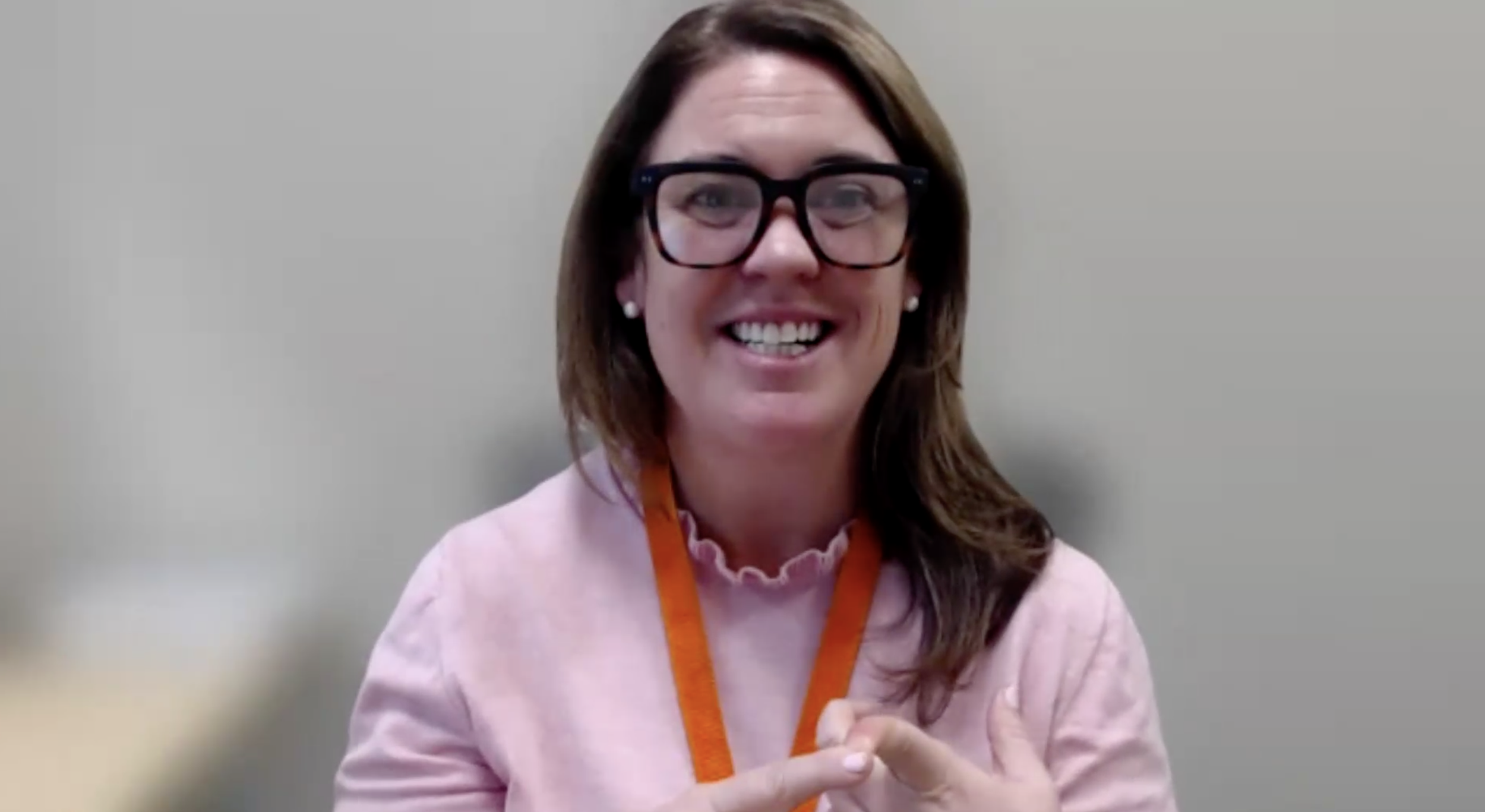
Colleen sharing about her experience in the Ahead of the Curve AI Cohort in a SWIM webinar
Colleen oversees philanthropy, marketing, and volunteers at Northern Illinois Food Bank. She's not an IT person, and she didn't come into this work as an AI expert. That's part of what made the cohort valuable.
"As leaders, we don't really carve out the time to talk through this," she said. "We wanted to be part of something where someone else was facilitating it so we could give our team members more clarity."
The cohort gave Northern Illinois Food Bank a roadmap and a framework they could share internally and build on. That was the missing piece. They had all the information in the world about AI, but they needed a structured way to make decisions about it together.
Building an AI Committee
One of the first things Colleen's team did after the cohort was form an internal AI committee. The makeup was intentional:
An executive team member to make it clear that leadership is onboard
A DEI manager to represent ethical issues around AI
Someone from IT for policy and governance
HR for training and management
Marketing, operations, and innovation team representatives to surface use cases
Each person was there for a reason, and that reason was clear from the start.
The committee's first few months were less about AI tools and more about culture. Before they could talk about what to do with AI, they needed to address how people felt about it.
At an all-staff IT training, staff were asked to raise their hands based on how they felt about AI — open to it or against it. The room split almost evenly in half. A live survey captured more detail about how people were already using it and what questions they had.
That data went back to the committee, and they started exploring: What do we need to do as a food bank to bring people along?
Small Policy Updates to Start
On the policy side, Colleen said they followed SWIM's recommendation to start small. Rather than drafting a sweeping AI policy, they added a single paragraph to their existing IT policy — naming the platforms universally approved for use (ChatGPT and Microsoft Copilot), and flagging what not to put into them: personally identifying information, neighbor data, or donor information.
"Some of the tools and applications we'd want to use — we can't yet," Colleen said. "We don't have the policies to support it yet." The committee is how they close that gap, with the policy perspective and HR asking the right questions before new tools get rolled out.
The “Why” Behind Automation
One of the most thoughtful aspects of Northern Illinois Food Bank's approach is how Colleen frames AI for her team.
"The word we can all get behind is automation," she said. "The more we can automate our work, the more we as human beings can be more relational and intentional."
She's honest with her team that the concerns around AI — environmental impact, embedded bias — are valid, and that leadership shares them. Having a DEI representative on the committee is one way they're acting on that, not just acknowledging it.
And when the conversation gets hard, she returns to the mission: "What is our main core? Ensuring that everybody has the food they need to thrive. And if we can do that better, we need to explore those automation tools."
Advice for Other Organizations
Northern Illinois Food Bank's AI Committee is now a strategic priority for the coming fiscal year. This work has moved from exploratory to essential.
Colleen has a few words of advice for other leaders thinking about AI:
Get your leadership team aligned before you go anywhere else.
Find an outside framework: a cohort, a partner like SWIM, or something that creates the structure to actually have the conversation. Without it, the work stays on the bottom of someone's to-do list.
Build your circle of champions. Know why each person is at the table, and make participation in the committee doable as part of their role. It shouldn’t feel like an extra ask on top of everything else.
The question marks around AI are still there for a lot of organizations. Northern Illinois Food Bank is providing a safe place to explore answers.
Curious how the Ahead of the Curve cohort could help your food bank move forward on AI? Join the interest list to know when the next cohort launches.