
Your Meetings Need CPR
Think about the last time you were in a group meeting that actually solved something. Someone named a problem they were stuck on. Someone else said, "Wait! I know exactly who you should talk to." Another offered a resource they'd been sitting on for months without realizing it was useful to anyone else.
That spark of interconnectedness and unlocking action can sometimes happen by accident. But what if it could happen in every meeting? It can, if the meeting is structured to make room for it.
We've implemented this model in networks across the country that exist to move communities closer to shared goals. And while every organization is different, there's one ingredient we've seen make the difference in actually getting goals over the finish line: CPR.
P.S.: In this article, when we refer to a “network,” we mean a group of people and/or organizations working together to advance a common cause. Power is shared in most networks! For example, a network that addresses the needs of community members who are experiencing homelessness could be made up of emergency shelters, grassroots groups, governmental agencies, supportive housing nonprofits, hospitals, and religious institutions.
What Is CPR in a Meeting?
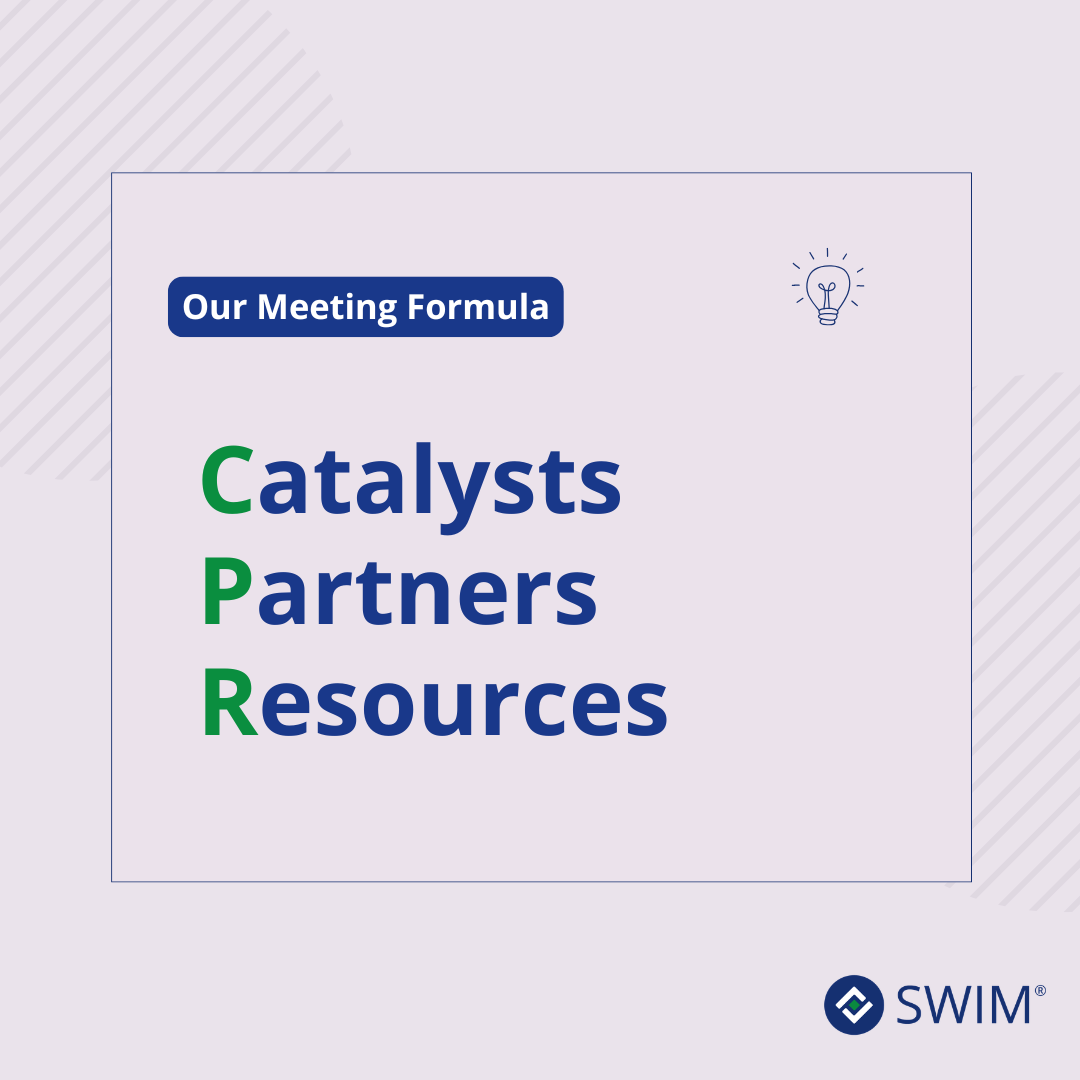
CPR is our acronym for the three types of support that keep a group’s work alive and moving:
Catalysts for action: Think of these as the nudges, brainstorms, or solutions someone needs to get unstuck
Partners who can help: These are specific people or groups who can step in and assist something get done
Resources to accelerate the work: These might be training, data, funding, documents, or connections
Just like CPR in an emergency, this kind of support restores momentum when progress has stalled. It keeps the work breathing.
Most organizations spend a lot of time updating each other and talking about the work. CPR is what moves people to do their work.
What CPR Looks Like in Practice
Here's an example of CPR in action. A participant stands up and says:
"I'm trying to get more girls into the construction program at the technical high school. This week, I put together a project plan and a flyer, but I really need people who can reach Latina high school students. Can anybody help me connect?"
In response, one member offers to share the flyer with her daughter’s Girl Scout troop. Another offers to connect her with a grantmaker who also funds a food pantry for underserved communities. A third member, hearing about the project plan, asks if she'd be willing to coach them through developing one of their own.
Three different kinds of support. Three connections that wouldn't have happened without a structured moment to ask.
We've seen CPR show up in simpler ways, too. In one food bank network, a member who was responsible for sourcing food asked the group:
“Can anyone in this group supply me with a simple list of culturally specific foods?”
He’d been searching for a list for quite some time. Another member provided the list, and he was able to include some varieties in his next order. This was a small moment with a big impact for the neighbors he was serving.
These interactions build trust in addition to advancing the work. When people experience a group as a place where they can ask for help and actually get it, they show up differently. They invest. They bring their real challenges, knowing they don’t need to put on a polished front.
A Few Things That Make CPR Work Well
Keep the group small. We've found that once a working group grows beyond about 12 people, it becomes hard to give everyone sufficient air time. Smaller groups mean more honest sharing and more meaningful exchange.
Keep the facilitator focused. As a facilitator, leaders must actively work to ensure the group doesn’t get too “in the weeds” on any one action in the meeting, or use the time to critique members. If follow-up conversations are warranted, encourage members to reach out individually. Protect the time so everyone gets a turn.
Normalize asking. CPR only works if members feel comfortable saying, "I'm stuck" or "I need help." That comfort builds over time, but the facilitator can model it early by naming it explicitly: This is what this time is for. Asking for support is the point.
A Meeting That Moves Things Forward
Every meeting has the potential to move your group closer to shared goals and deepen the relationships that make that work possible. CPR is how you make that potential real, meeting after meeting. Eventually, asking for and offering support will become second nature for your group.
Curious how CPR and other meeting facilitation methods could strengthen your gatherings? Contact us today for a free 30-minute discovery session.