
Use These 12 Learning Strategies Next Time You Lead a Workshop or Meeting
If you’ve ever suffered through the awkward silence in a meeting after you ask participants to share what they learned, you know getting participation in a meeting or workshop can be painful.
Here’s the thing: Participants have to be engaged personally and emotionally to process and learn the information you present. They won’t learn by passively listening. They’ll learn by doing.
Once they’re engaged in this way, they’ll feel physically energized, emotionally connected, and mentally focused — all the good stuff that comes from learning.
Our team leads countless workshops every year and we’ve compiled our favorite engagement strategies for you here.
You’ll find low prep, medium prep, and high prep categories. Whether you’re scrambling and need an activity 5 minutes before a call starts or you’re preparing weeks in advance, we’ve got you covered.
12 Learning Strategies to Actually Engage Participants
These strategies will save your gatherings from blank stares and get people engaging with the content and one another. They were road tested by our team, so we know they all work!
Low Prep Strategies
These strategies can all be used with very minimal prep by the facilitator.
Mapping
How it works
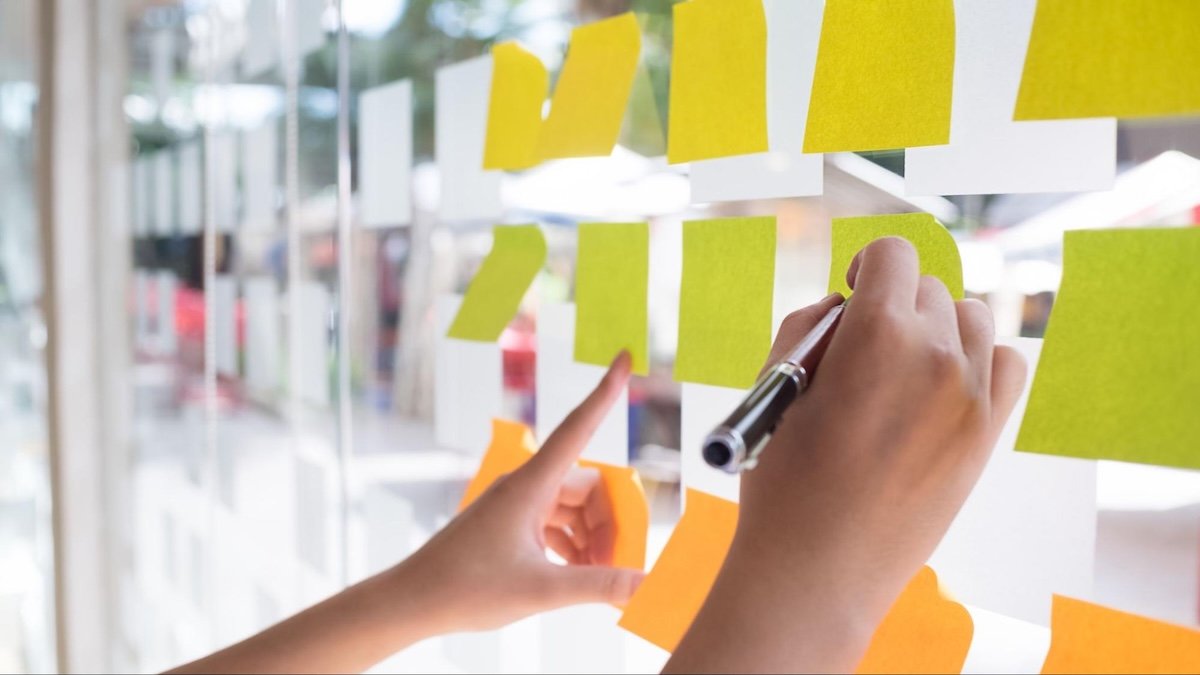
After a big question or problem is shared by the facilitator, give Post-Its to participants to generate ideas or reflections. Stick them on a large work space. Once lots of notes have been generated, have participants group them into similar categories, label each category, and discuss why and how the ideas connect with each other (this can work on a virtual whiteboard too!).
At SWIM, we use this constantly when we facilitate board meetings and strategic planning sessions. Something as simple as, “What goals do we want to accomplish this year?” can lead to a flurry of Post-Its and categorization.
Why it works
This method cleans up the thinking when needing to come to a group consensus. It provides a relational and visual representation of a group's insights and observations.
When to use
Best used for grouping and categorizing ideas and reactions.
Helps to synthesize information and gather input.
Used in mission and vision creation for organization.
Mind’s Eye
How it works
Before starting the presentation or reading a text, choose 10-15 important words from the text you’re about to go over. Slowly and dramatically read them. Give participants time to do one of the following:
Draw a picture based on their mental image
Ask a question they hope the text will answer
Make a prediction about the text
Describe the feelings their mental picture gives them
Why it works
People learn better when they process information through multiple channels. This is called dual coding.
When to use
This is best used when heavy text is involved. It allows the participants to supply their own images by actively converting the words on the page to memorable representations of the content.
TQE: Thoughts, Questions, Epiphanies
How it works
Ahead of time, participants are each given Post-Its or 3x5 index cards with a label T (Thoughts), Q (Question), E (Epiphanies).
While information is being presented they are asked to respond with one of the choices. The facilitator can make it open ended or ask for a certain type, for example: "Please write a question."
The facilitator must take frequent breaks to allow for thinking and discussion of participants’ responses.
Why it works
The TQE method encourages listening, deeper thinking, and richer discussion. It also builds accountability and provides thinking time.
When to use
This is best used when the content is complicated with a lot of details and nuances.
Stand the Line
How it works
Create a line across the room with tape or other physical objects. The facilitator presents an issue, topic or question. Ask participants to take one step toward the line if they agree, one step away if they disagree, or use lines as values (1-10).
For example, if you’re leading a session on the use of personality tests in workplace onboarding, you could make statements like:
The Myers-Briggs is an accurate test.
Knowing my coworkers’ Enneagram types leads to better work relationships.
Personality tests do more harm than good.
The facilitator then guides a discussion about the topic. The participants listen to other responses to add to their own understanding or adjust their stance on the topic.
Why it works
Stand the Line provides movement, dialogue, personal connection, and a visual depiction of participants' opinions and understandings.
When to use
It’s best used after brief information is shared and participants are asked to have an opinion or connection. It’s better for weighing in with opinions rather than facts.
Medium Prep

These methods require some gathering of materials or resources by the facilitator.
Building Anticipation
How it works
Participants are given a set of statements about the topic in an “anticipation guide.” They note whether they agree/disagree or think the statements are correct/incorrect. The presentation or teaching provides the answers. Once the direct instruction is done, they revisit the guides to see if their opinions have changed.
Why it works
This method builds curiosity and activates knowledge about the content or topic, which is called frontloading. It sets a purpose for learning and connects new information to prior knowledge.
When to use
It’s best used during a meeting to level-set the facts without boring people. It can take the form of a fun quiz where people guess at the answers and then a presentation provides the answers.
Jigsaw
How it works
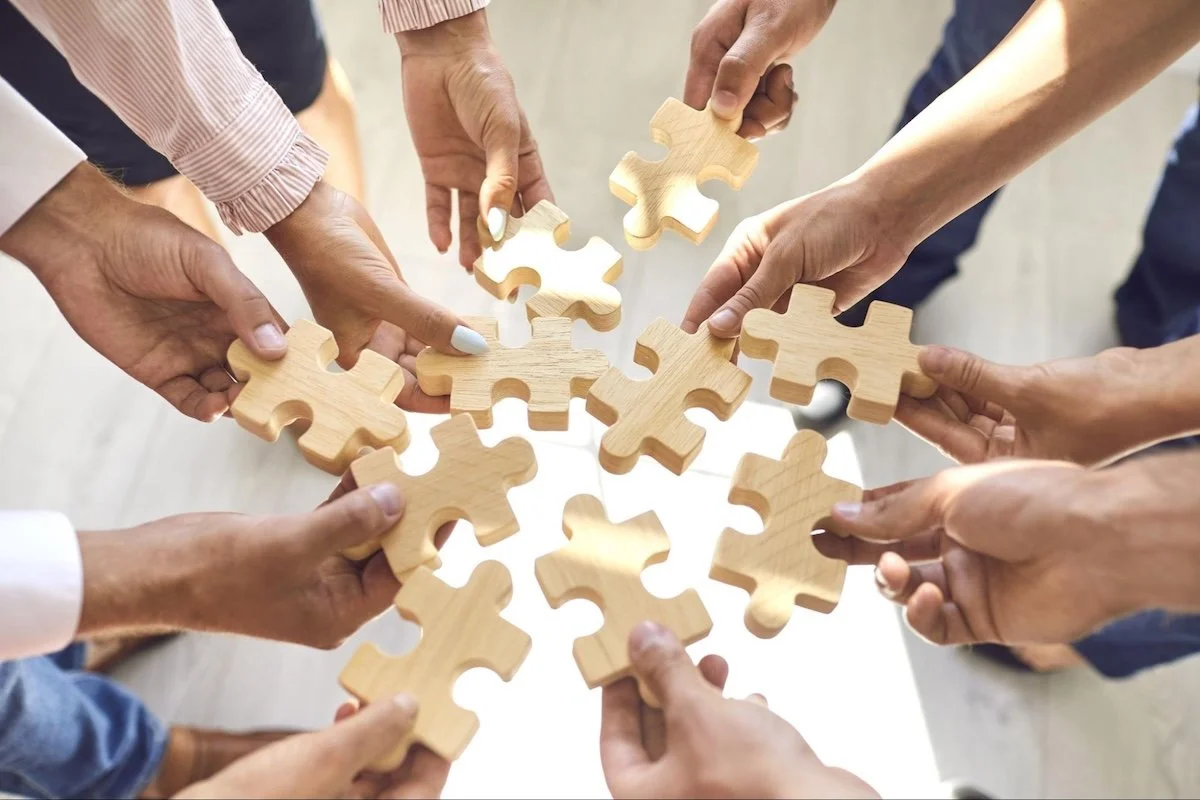
Each person in the group takes responsibility for one chunk of the content, then teaches it to the other group members. Members then fit their individual pieces of information together to form a complete body of knowledge.
Why it works
The Jigsaw method gets participants learning from each other rather than the facilitator. Participants are fully engaged in the learning because each person is responsible for the learning of others.
When to use
Use this method when you have a large amount of straightforward information to transfer. The facilitator does not need to be the expert on the information. If using articles or chapters, it’s best to offer a print copy for participants to jot down notes and highlight.
Turn up the fun by each presentation taking on the form of a 30-second commercial, or as the plot of a major movie.
Igniting the Topic
How it works
Use any device that can prompt thinking, discussion, and dialogue*:
Video clips
Photographs
Works of art
Cases
Excerpts from articles
Books
Quotes
Metaphors
Words
The facilitator shows the prompt before sharing content, allowing time for participants to think and connect to the content. It’s important to plan questions ahead of time to help guide the conversation after experiencing the prompt.
Why it works
This promotes excitement and dialogue by digging into a topic and exploring ideas with others. It helps participants make connections, provides background knowledge, and engages participants. It also turns attention away from the facilitator.
When to use
It’s best used when immediate engagement is needed in the information. An effective thinking prompt is:
Provocative
Complex
Personally relevant
Positive
Concise
Visual Frameworks
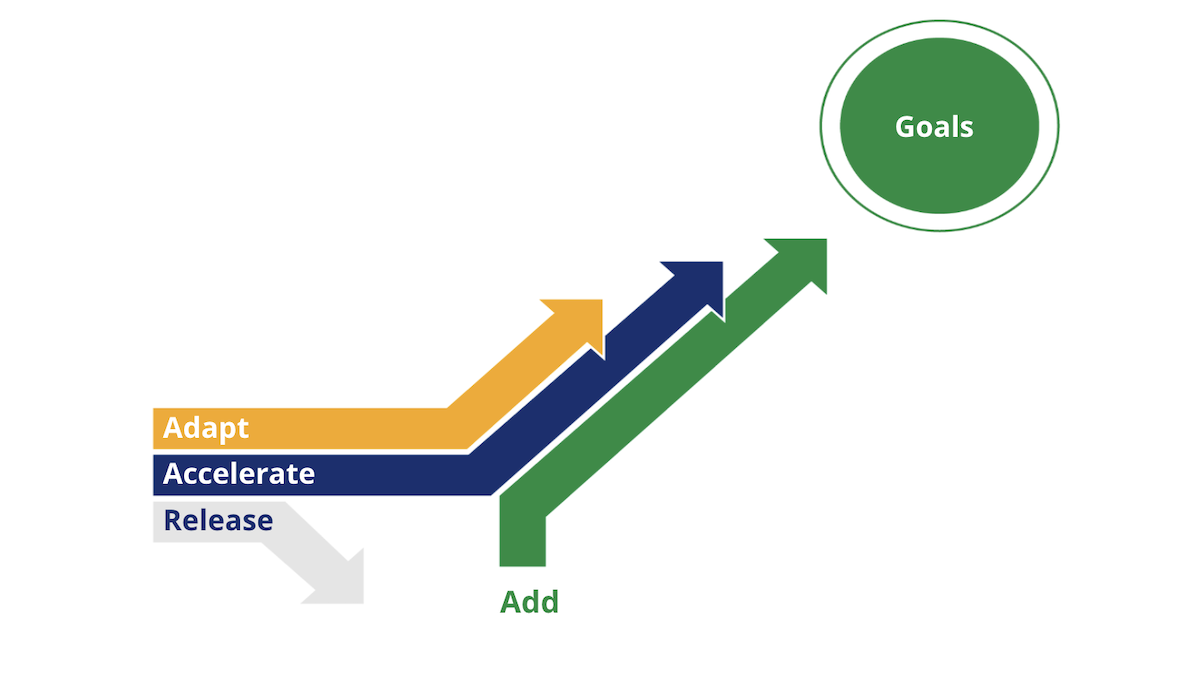
An example of a visual framework used during strategic planning sessions with SWIM
How it works
Present the content on a visual framework. This gives participants a way to see the connections among the concepts.
Extend the activity by providing participants with an empty graphic organizer for them to take notes from the presentation or construct together throughout the presentation. That organizer then becomes the takeaway from the training that can be referenced later.
Why it works
We process information both visually and verbally. Visual frameworks use the verbal in a visual format so we can better understand how the concepts are related. It’s accessible to all learners.
When to use
Visual frameworks are best used when people need to consider how ideas relate to one another. For example, if you're presenting information about a policy problem that affects clients you serve, a visual framework would be a good way for people to commit to memory the ripples and connections between the policy and their clients.
What’s It Mean?
How it works
Without sharing the exact concept you’re teaching about, present objects, data, artifacts, and experiences that illustrate the concept being shared. Without the facilitator leading, participants look at attributes of each, sorting, organizing, and classifying to gain a better understanding of the concept.
For example, let’s say you want to teach about food insecurity disparity in four counties. You give participants sets of 20 cards that each have an anonymous person’s survey answers about food insecurity. How would they sort them? Maybe one person or group would sort them based on household size and another would sort based on race or income.
After each initial sorting, the facilitator leads discussion about why participants grouped the objects the way they did. You can send them back to sort the cards again and see if they make new discoveries about the data, eventually getting to the place of collective understanding.
Why it works
This strategy results in deep understanding because we instinctively learn by organizing things in categories based on common attributes. It uses the practice of identifying similarities and differences, and forcing participants to determine what is and is not relevant, which is a very effective way for people to learn.
The information is not being delivered to learners — they are discovering it on their own, making it more engaging.
When to use
This one is best used when there are a lot of data examples or objects for participants to analyze.
Stories
How it works
Facilitators tell stories to clarify, enhance, and reinforce learning.*
Plan ahead of time. Make it conversational, simple, and short. Place them appropriately in the presentation. You can also ask participants to bring their own stories to illustrate the point.
For example, in teaching about the SNAP program, you can tell a firsthand story of a family who got on SNAP when they needed it the most, and how it provided them the groceries they needed when they faced job loss.
Why it works
Stories engage participants by building community in the group. Telling a story allows everyone to find a way to relate to the content and provides a concrete context to place abstract ideas.
When to use
Storytelling is best used to accomplish several goals:
Anchoring new knowledge
Building prior knowledge
Prompting thinking and dialogue
Generating interest
Offering new perspectives
Inspiring hope
High Prep
These methods require both planning and gathering of materials well ahead of time.
Gallery Walk
How it works
Posters are displayed around the room for a gallery walk. Groups circulate the room, doing a gallery walk to view and discuss what they see on each poster. An empty handout can be given for groups to record important points from each poster. Or, provide Post-Its for groups to leave comments on posters.
Alternatively, participants can represent the content themselves using pictures, symbols, or graphics rather than words. Stations are set up around the room. Small groups of participants travel from station to station together, performing some kind of task or responding to a prompt, either of which will result in a conversation.
Why it works
It brings movement, small group collaboration, visual representation, and high engagement. Students can learn from each other.
When to use
This is helpful when there are several different ideas or topics that need to be covered and your time may be limited.
PechaKucha
How it works
PechaKucha is a 20x20 presentation style: 20 slides, 20 seconds per slide. The facilitator only puts visuals on each slide and then has 20 seconds to explain each visual.
It can be combined with an empty graphic organizer for participants to record notes during the presentation.
Why it works
This is a concise way to present information that engages participants as they only need to look at a single slide with limited information while the facilitator explains it.
When to use
PechaKucha is best used when the facilitator is the expert on a topic and has specific details and knowledge to share. It can also be group sourced. Participants do a pre-read and then during the meeting, each person suggests one image and the 20 seconds of text. This could codify learning.
Unlock More Learning
We hope these learning strategies lead to an engaging meeting or workshop where you can see lightbulbs coming on. We specialize in teaching workshops for nonprofits and organizations on topics like building and sustaining trust, board engagement, effective facilitation, and innovation. We use a lot of these techniques and others to highlight not just our own expertise, but the knowledge of the group.
Contact SWIM and we’ll develop a custom workshop for your next gathering.
*Knight, Jim. High Impact Instruction, 2013.